In this article
- Why Do 63% of Customers Expect a Review Response Within a Week?
- What Is Dealership Reputation Management in 2026?
- Where Should Your Reviews Actually Live?
- How Do Negative Reviews Become a Competitive Advantage?
- Why Does Review Freshness Matter More Than Five Stars?
- Can Fake Reviews Destroy a Dealership's Credibility?
- Frequently Asked Questions
- Related Reading
The Bottom Line: Nearly 63% of customers expect a dealership review response within a week - yet most stores leave complaints unanswered during the exact window shoppers are deciding where to buy. Spreading reviews across platforms matters too, since 61% of car shoppers start on marketplaces like Cars.com, not Google.
Why Do 63% of Customers Expect a Review Response Within a Week?
Dealership reviews run on a tighter clock than most managers think. A majority of customers expect a response to negative reviews within days, not weeks (Cars Commerce, 2025). That expectation sets the tone before anyone shakes a hand. A shopper who spots an unanswered complaint from last Tuesday draws a conclusion about the store's attentiveness long before a salesperson gets a shot at a first impression (according to Carscommerce).
Acknowledgment matters more than resolution speed. Customers want to know their review was noticed and read - and given the power of a single review in either direction, addressing them promptly is always warranted (CallRevu, 2025). A dealership that leaves reviews sitting unanswered communicates disinterest. That silence lands at the precise moment a prospective buyer is deciding whether to visit the showroom or scroll past (as reported by Callrevu).
Speed matters because shoppers are constantly reading reviews. A buyer comparing three rooftops will read the most recent exchange between a customer and a manager before reading any ad copy. That behavior makes response time a visible, public metric of how much a dealer cares.
Key Review Behavior Statistics for Dealerships in 2026
| Metric | Statistic | Source |
|---|---|---|
| Customers expecting a review response within a week | 63% | Cars Commerce, 2025 |
| Shoppers who start their search on a marketplace (e.g., Cars.com) | 61% | Cars Commerce, 2025 |
| Recommended response window after a transaction (follow-up message) | Within 24 hours | Cars Commerce, 2025 |
What Is Dealership Reputation Management in 2026?
Defining the Discipline
Dealership reputation management is the practice of monitoring, soliciting, and responding to online reviews to shape search visibility, public perception, and purchase decisions. Online reviews influence buyer perception and buying decisions while creating SEO opportunities (CallRevu, 2025). That makes reputation management non-optional for any store that wants to stay competitive in 2026.
Why a Plan Matters
A good online reputation can shift overnight. A 2025 CallRevu report stressed that every dealership needs a plan to counter the speed at which sentiment can change. One viral complaint or a string of unanswered reviews can undo months of goodwill. The plan doesn't need to be complex. It does need to exist.
Top-performing teams treat reviews as a real-time focus group. Many highly rated dealerships use review feedback to identify which parts of their process work and which don't (Cars Commerce, 2025). That turns reputation management from a defensive chore into an operational advantage. The insights are free, public, and refreshed every day by the customers themselves.
Where Should Your Reviews Actually Live?
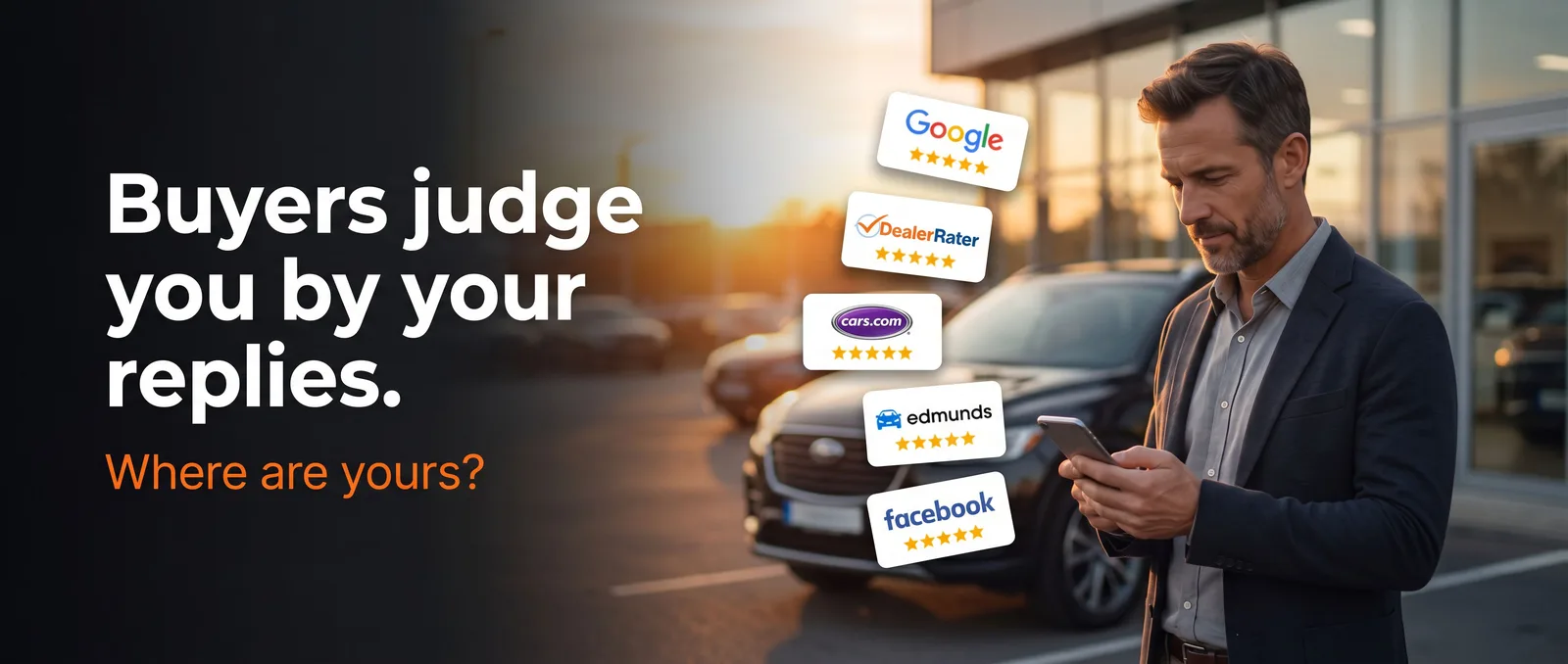
Concentrating all review efforts on Google ignores where most car shoppers actually begin. 61% of shoppers start their search on a marketplace like Cars.com (Cars Commerce, 2025). A store with strong Google reviews but zero marketplace presence is invisible during the highest-intent phase of the buying journey. Dealers who align their review strategy with actual shopper behavior - not the most familiar platform - capture attention at the moment it matters most.
Spreading Feedback Across Platforms
Cars Commerce (2025) advised dealerships to spread feedback across Cars.com, Google, Facebook, and additional platforms. The logic is straightforward. Each platform serves a distinct role in the purchase funnel. A service customer browsing Facebook encounters different reviews than a buyer deep in vehicle comparison on Cars.com. Stacking authentic feedback across all of these channels creates a cumulative credibility advantage no single-platform strategy can replicate.
Low-Tech Tactics That Still Work
Gathering reviews doesn't require expensive software. Simple tactics still deliver:
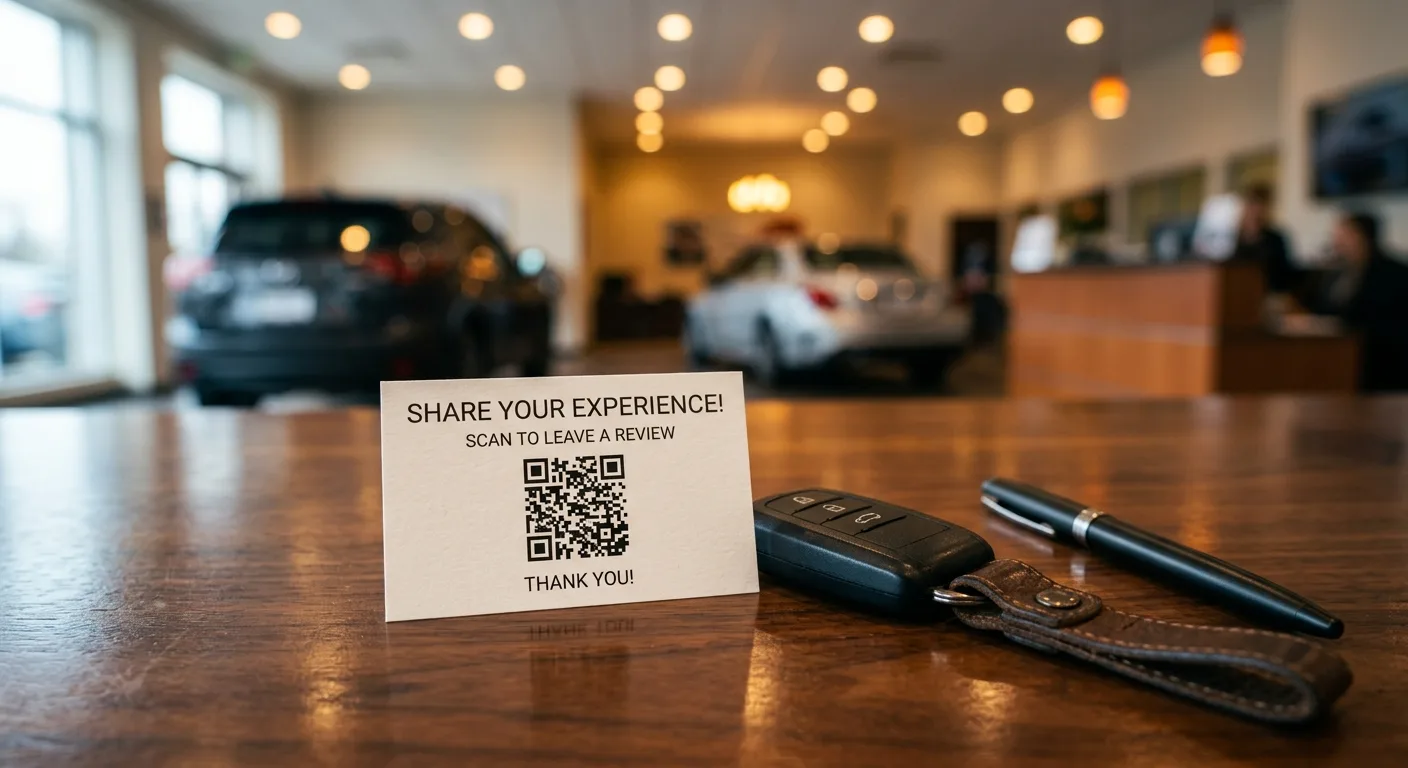
- Review reminder cards handed to customers at delivery
- QR codes placed in the showroom and service lounge
- Follow-up messages sent within 24 hours of a transaction
A 2025 Cars Commerce guide confirmed these methods remain effective. Here's the disconnect: relying on Google alone won't get a dealership ahead. Diversifying the ask across platforms turns every happy customer into a multi-channel ambassador.
Low-Tech Review Collection Tactics
| Tactic | Touchpoint | Timing |
|---|---|---|
| Review reminder cards | Handed to customers at delivery | At point of sale |
| QR codes | Placed in showroom and service lounge | During visit |
| Follow-up messages | Sent digitally after transaction | Within 24 hours |
Review Platform Strategy - Where to Spread Feedback
| Platform | Role in Purchase Funnel | Why It Matters |
|---|---|---|
| Cars.com | High-intent vehicle comparison | 61% of shoppers start here - ignoring it means invisibility during peak buying intent |
| General search and local discovery | Strong reviews boost SEO but alone miss marketplace-first shoppers | |
| Service and community engagement | Service customers encounter different reviews than active buyers on marketplaces | |
| Additional platforms | Cumulative credibility | Stacking authentic feedback across channels creates an advantage no single-platform strategy can replicate |
How Do Negative Reviews Become a Competitive Advantage?
A thoughtful reply to a one-star review does double duty. A personalized response signals to potential customers that the dealership will follow up and stay engaged even after the sale, regardless of the buying experience (Cars Commerce, 2025). That public exchange reframes the narrative. The original complaint becomes a backdrop for demonstrating accountability. Every future shopper who reads the thread walks away with evidence the store takes ownership - a message no display ad delivers as convincingly.
Turning Criticism Into a Showcase
Even a less-than-stellar review can be turned around - it gives a dealership a chance to provide responsive solutions and make things right (CallRevu, 2025). Here's the disconnect: the real audience isn't the original reviewer. Prospective buyers scanning a review page register the complaint, then scroll down and find a manager offering a concrete fix. That visible accountability loop - problem stated, ownership taken, resolution offered - carries persuasive weight that an unblemished wall of five-star ratings cannot match. It works precisely because it feels real.
Speed and personalization are the two levers that matter most. A quick, personalized response matters to the current reviewer and every future customer who reads it (Cars Commerce, 2025). Generic copy-paste replies do the opposite. They confirm the reviewer's suspicion that nobody is listening. Ten minutes on a thoughtful reply earns credibility no ad budget can buy.
78% of car buyers choose the first dealer to respond - and the industry average response time is 1 hour 38 minutes. See how Speed to Lead replies in under 60 seconds: automated SMS response that captures inbound leads 24/7 before your competitors can pick up the phone.
Why Does Review Freshness Matter More Than Five Stars?
Recency carries more persuasive power than a pristine average. Freshness matters just as much as five stars - shoppers want to know what the experience was like last week, not last year (Cars Commerce, 2025). A store with a slightly lower rating but a steady stream of current reviews demonstrates ongoing engagement. A store with a higher average but months of silence raises an uncomfortable question. Did the quality drop, or did the dealership stop asking? Either interpretation costs leads.
Online Reviews Travel Faster Than Word of Mouth
Word of mouth still works. But online reviews go further, faster (CallRevu, 2025). A single positive review posted this morning can reach hundreds of shoppers by tonight. That velocity makes a steady cadence of fresh reviews more valuable than any referral program. The compound effect over a quarter is enormous.
The Power of Naming Names
That last data point matters: customers frequently praised individuals by name for providing friendly, knowledgeable service (CallRevu, 2025). Reviews that call out a specific salesperson or service advisor carry a different kind of weight than generic praise. They read as firsthand accounts, not templated endorsements. They also give managers a direct line of sight into which employees are creating memorable experiences. Dealerships that coach customers to mention their point of contact by name generate reviews that feel personal to the next reader - and that authenticity is difficult to manufacture.
Can Fake Reviews Destroy a Dealership's Credibility?
Fake reviews are corroding consumer trust. The automotive space is not immune. A 2025 comment thread on The Drive illustrated the dynamic in miniature. One commenter posted a conspicuously polished response calling the article "a stellar read" and "a masterclass in automotive journalism with sharp analysis." The phrasing was so uniform and detached from the article's actual content that it read like template output, not a genuine reaction. That same disconnect - glowing language with no specificity - is exactly what savvy shoppers now look for when scanning dealership review pages (per Thedrive).
Savvy Buyers Spot the Patterns
Consumers are getting better at detecting fakes. One commenter in the same 2025 Drive thread said they'd love for someone to document the average car buying process - it would shock the enthusiast side of the market. Real buyers have messy, complicated experiences. When every review reads like a press release, skepticism kicks in fast. Authenticity - including the occasional three-star review - is the only durable strategy.
The antidote to fake reviews is genuine engagement. Online reviews influence customer perception, buying decisions, and search rankings (CallRevu, 2025). Stores that monitor and manage authentic sentiment will always outperform those gaming the system with fabricated praise. In 2026, the dealers winning the reputation game respond honestly, solicit feedback consistently, and let real customer voices do the selling.
Frequently Asked Questions
How quickly should our dealership respond to negative reviews?
According to the data, 63% of customers expect a response within a week, but faster is better. Acknowledgment matters more than immediate resolution - customers want to know their review was noticed and read. A follow-up message sent within 24 hours of a transaction is a proven best practice that also applies to review responses.
Why shouldn't we focus all our review efforts on Google?
Because 61% of car shoppers start their search on a marketplace like Cars.com, not Google. A store with strong Google reviews but zero marketplace presence is invisible during the highest-intent phase of the buying journey. Cars Commerce recommends spreading feedback across Cars.com, Google, Facebook, and additional platforms to build cumulative credibility.
What is the ROI of responding to negative reviews?
A personalized response to a negative review signals to prospective customers that the dealership stays engaged even after the sale. The real audience is not the original reviewer - it is every future shopper who reads the thread and sees visible accountability. That problem-stated, ownership-taken, resolution-offered loop carries persuasive weight that even a wall of five-star ratings cannot match.
How long does it take to implement a basic dealership reputation management plan?
The plan does not need to be complex - it just needs to exist. Low-tech tactics like review reminder cards at delivery, QR codes in the showroom and service lounge, and follow-up messages within 24 hours of a transaction can be deployed almost immediately. The key is consistency across platforms rather than perfection on a single channel.
Can review feedback actually improve our dealership operations?
Yes. Many highly rated dealerships use review feedback to identify which parts of their process work and which do not, according to Cars Commerce. Treating reviews as a real-time focus group turns reputation management from a defensive chore into an operational advantage. The insights are free, public, and refreshed every day by customers themselves.
Do we really need expensive software to collect more reviews?
No. Cars Commerce confirmed that simple, low-tech tactics remain effective in 2026. Review reminder cards handed out at delivery, QR codes placed in the showroom and service lounge, and follow-up messages sent within 24 hours of a transaction all drive results. The critical step is diversifying the ask across multiple platforms so every happy customer becomes a multi-channel ambassador.
Related Reading
Filed underDealership OperationsService DriveAutomation

Written by the VisQuanta team
The people who build and run the Agentic Ecosystem for automotive businesses: lead response, reactivation, calls, reviews and chat, checked by a human on every account.