

.jpg&w=3840&q=75)
Key Takeaways
- A dealership generating 500 leads monthly at $200 per lead wastes $360,000 a year to poor lead management.
- Responding to leads within 5 minutes lifts conversion odds 100× compared with a 30-minute wait — yet most dealers still take 24 hours or more.
- 34% of CRM customer records lack emails and 50% have incorrect addresses, making follow-ups land on broken channels.
- Automation cuts response times under 2 minutes, lifts follow-up reliability 90%, and grows conversions 25%.
- SMS, email, and phone working together convert at materially higher rates than any single channel alone.
Most of the leads dealerships lose aren't lost at the top of the funnel. They're lost in the twenty-four hours after a shopper submits an inquiry — while the ad spend that paid to create the lead keeps running.
On almost every dealership audit our team runs, the pattern looks the same: the campaigns are working, the web forms are working, the buying intent is real. Then the lead sits for a day, gets a generic reply on day two, and by the time the BDC picks up the phone that shopper is already signing paperwork at the store that called back in six minutes.
The good news is that lead loss is unusually diagnosable. There are four places it leaks — response time, follow-up discipline, CRM hygiene, and channel coverage — and each one has a concrete fix. The bad news is that most dealerships try to fix them in isolation, which is why the spend keeps climbing while conversion stays flat.
This guide walks through the four leaks, what the numbers actually look like in 2026, and what changes when you close them together rather than one at a time.
LotTalk Ep 7: Mastering BDC and Lead Management Ft. The CRM Queen Stacey Ellison
::: @iframe https://www.youtube.com/embed/EH8Exz6CiLY :::
Common Lead Management Mistakes Dealers Make
Dealerships often stumble in lead management, losing out on substantial revenue each month due to avoidable errors.
Get weekly AI strategies for your dealership
Join 2,500+ automotive professionals. No spam.
Slow Response Times That Cost Sales
Responding to a lead within 5 minutes can boost conversion chances by a staggering 100× compared to waiting 30 minutes. Yet, the average response time in the industry is a sluggish 24 hours [2]. Timing is everything - when a potential customer submits a lead, they’re actively shopping. In fact, 78% of car buyers go with the dealership that gets back to them first [4].
Unfortunately, delays are far too common:
18% of leads never even get a response [2].
Only 16% are contacted within 15 minutes [2].
After-hours leads, which account for 40–45% of submissions [2], are frequently overlooked.
Even when dealers do respond, many drop the ball by failing to provide critical information - 53% of responses exclude pricing details, even when explicitly requested [2].
The bottom line? Quick responses matter, but they’re just the first step. Consistent follow-up is just as crucial.
Broken Follow-Up Processes
Most sales require persistence - at least five follow-ups, according to research [4][5]. Yet, 44% of salespeople only contact a lead once, leaving potential customers hanging [5][7].
Mareks Lomako from the Green Light Your Marketing podcast highlights this issue:
"We've worked with businesses spending tens of thousands per month on ads...They thought they needed more leads. But when we looked deeper, the real issue was their follow-up process - leads were sitting for days before anyone contacted them, or worse, they weren't followed up on at all." [6]
Another missed opportunity? Dealers often fail to use multiple communication channels. Leads who receive a follow-up text message convert at a 40% higher rate [7]. Yet, many dealerships stick to just phone calls, emails, or chatbots. Personalization also makes a difference - emails with the recipient’s first name in the subject line have a 29.3% higher open rate [7].
Messy CRM Data Problems
Disorganized CRM data is a silent revenue killer, with poor data quality costing U.S. businesses an estimated $3.1 trillion annually [3]. When sales teams can’t trust their CRM, they waste time chasing unproductive leads or risk contacting the same customer multiple times.
The problem worsens during CRM migrations. Without clear data standards and validation processes, errors pile up. A lack of integration between marketing tools, CRM systems, and finance platforms creates data silos. This fragmentation leads to missed follow-ups, duplicated efforts, and difficulty tracking which sales efforts actually worked.
The CRM problem compounds the first two: even if you fix response time and follow-up cadence, bad data means half the automation misfires. Clean the record base before you scale the outreach.
How to Stop Losing Leads
The fix isn't a new platform. It's three disciplines working together: an automated first touch that hits inside the five-minute window, a multi-channel cadence that runs whether the rep is on the floor or not, and a CRM that's clean enough for both to work.
Using Automation for Lead Response and Follow-Up
Top-performing dealerships respond to leads within five minutes, and the payoff is a 100× conversion lift over a 30-minute response[10][11]. The math is simple: the shopper who submitted a form 90 seconds ago is still on the browser tab. The shopper you call back at 10 a.m. tomorrow is already in conversation with two other stores.
Automated first-touch systems are what make five-minute response realistic around the clock rather than a stat a BDC hits on good days. Dealerships that implement them typically cut lead-response time by 80% or more[11], and pair that with a 25% lift in closed deals from the same lead volume[8].
Automation isn't only about speed. It also removes the human inconsistency that breaks multi-touch follow-up — the rep who calls on day one and forgets the day-three text, the weekend lead that nobody owns until Monday. A system that runs the cadence the same way every time is what drives the 90% follow-up reliability improvement that properly-deployed dealerships report [11].
Speed alone won't close the gap, though. Channel coverage matters just as much.
Multi-Channel Follow-Up Methods
Seventy-eight percent of customers go with the first dealership that follows up [13], so it’s vital to reach out on the channels your leads prefer.
SMS: With open rates exceeding 90% [12], text messages are perfect for quick updates or reminders.
Email: Great for detailed information, such as financing options or promotional offers.
Phone calls: Best for high-intent buyers ready to discuss specifics or negotiate deals.
Timing is everything. Reaching out within five minutes of an inquiry makes leads 21 times more likely to convert [13]. If you don’t get a response right away, follow up within 24 hours, then again after three days. Adding special offers or extra details can keep prospects engaged. After the initial outreach, weekly or bi-weekly check-ins help maintain interest without overwhelming them.
Personalization is just as important as timing. For example, a message like, “Get an instant trade-in offer on your [Vehicle Make] today!” feels relevant and engaging [12]. Tailor your follow-ups based on customer segments, such as first-time buyers, luxury shoppers, or service clients.
Slow responses can cost you - 46% of potential sales are lost due to delays [13]. On the flip side, dealerships using AI-driven follow-up calls have seen a 30% boost in lead conversions and a 60% reduction in response times [9].
Better CRM Use and Data Management
The CRM is where the first two disciplines either compound or quietly fail. If 34% of your records have no email and half the phone numbers are stale, your five-minute response automation is firing into a void for a third of the database. Speed without a clean substrate is expensive theater.
Three things move the needle more than any software change: a duplicate dedupe pass on the existing database, a validation rule that rejects obviously-broken contact fields on ingest, and a scheduled integration between the CRM and the DMS so a service visit updates the sales record automatically. Do those three and the rest of the "best practices" writing on this topic mostly takes care of itself[14].
Segmentation follows from clean data, not the other way around. Once the records are trustworthy, splitting the database by lifecycle stage (fresh lead, aged lead, service-only, past buyer) lets each group get a different cadence — which is where the conversion lift from personalization actually shows up, not in the "Hi {first_name}" template swap.
sbb-itb-0329cfa
How VisQuanta Helps Dealers Stop Losing Leads
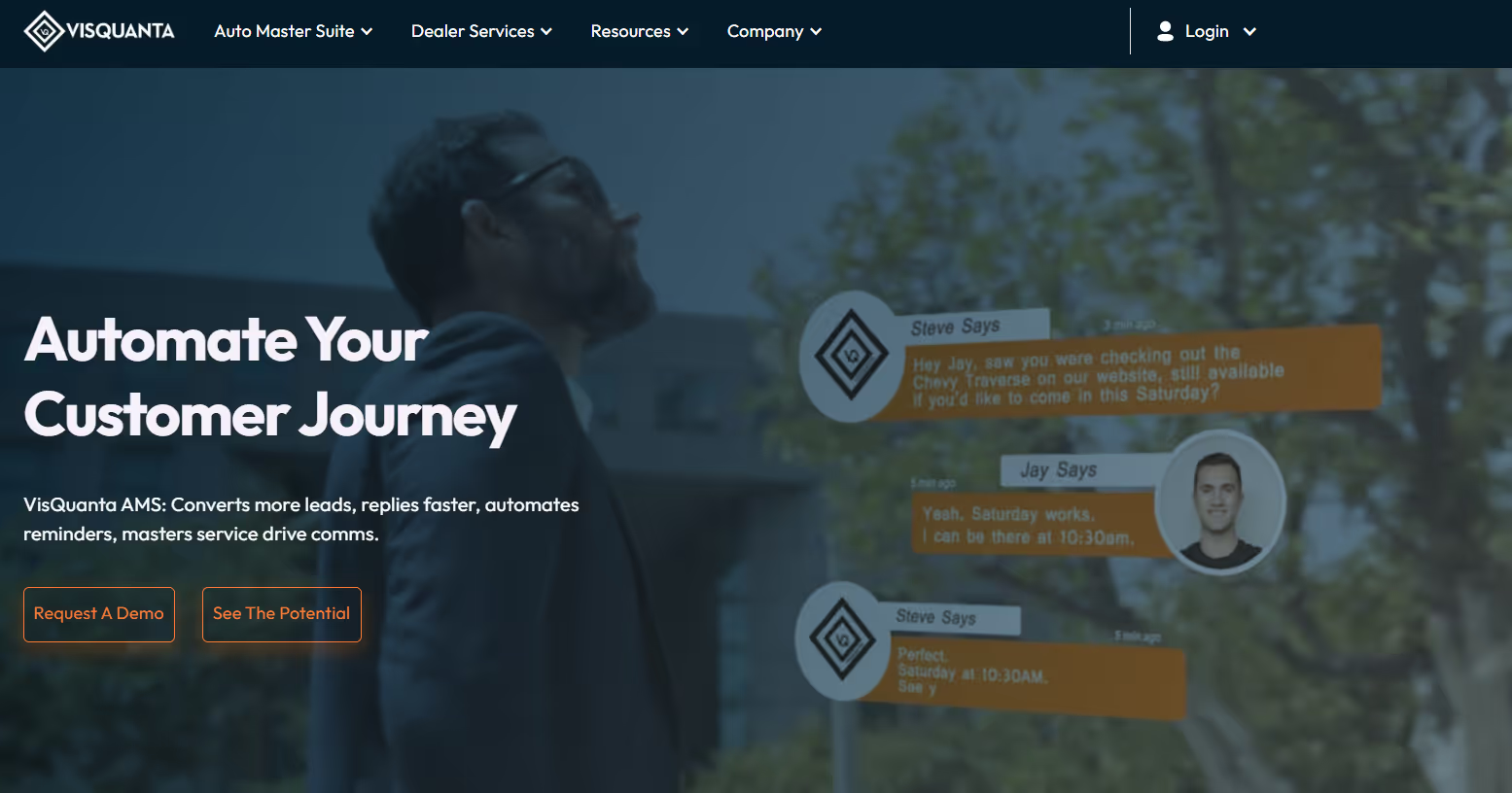
Managing leads effectively demands the right mix of tools and expertise. VisQuanta tackles the lead-loss problem with a blend of automation and training, packaged in its AutoMaster Suite. This solution is tailored to help U.S. dealerships recover and convert missed opportunities into measurable gains.
CRM Integration and Database Recovery
The AutoMaster Suite works seamlessly with popular CRMs like CDK, DealerSocket, and VinSolutions. Its setup process is quick - just 14 business days - ensuring minimal disruption to daily operations [17].
One of its standout features is the ability to bring dormant contacts back to life. Research shows that 68% of "dead" CRM contacts still hold revenue potential [15]. VisQuanta’s AI Database Reactivation taps into this, reviving over 30% of inactive leads and helping sales teams re-engage these prospects. For instance, a Chevrolet dealership in Ohio turned $400,000 worth of lost leads into revenue in just four months:
"We recovered $400K in lost revenue from dead leads in 4 months – VisQuanta paid for itself 10x over." [15]
Most dealerships see immediate results, with a 5% reactivation rate for lost leads right out of the gate. Some even report reply rates as high as 42% from previously cold leads [18].
Fast Response Services and Automation
Speed matters when it comes to lead management. VisQuanta’s automation tools are designed to capture and respond to leads in real time, even during off-hours [15][16]. For example, a Toyota Group dealership in Texas achieved a lead response time of just 9 seconds, which directly led to 17 additional units sold each month [15].
The suite also automates text and chat interactions, helping dealerships build trust in as little as 8 seconds. This approach boosts appointment show rates by 19% [15]. On top of that, automation saves sales teams an average of 220 hours per month on follow-up tasks [17]. Dealerships typically see efficiency improve by 15–30% across their sales teams, with revenue gains averaging $1.6 million per dealership in the first year [15].
Sales Training and Support
Technology alone doesn't close the gap. The dealerships that see results in the first week pair the automation with sales-floor training — F&I-certified coaching and ongoing call audits that turn the extra response volume into appointments kept and deals closed. Without that piece, faster response times just produce more no-shows.
On average, dealerships using the AutoMaster Suite report a 10–20% boost in sales and recover more than 5% of aged leads. Every deployment is configured to stay within state and federal TCPA rules for SMS and voice outreach, which is increasingly the thing that gets dealers in trouble when they bolt automation onto a process that wasn't compliant to begin with.
Manual vs. Automated Lead Management Comparison
The differences between manual and automated lead management are stark, especially when you look at the results dealerships achieve. Manual processes often create inefficiencies, while automation offers streamlined solutions that save time and boost conversions.
Manual vs. Automated Process Differences
Relying on manual lead management can slow dealerships down, costing them valuable opportunities. For example, 78% of customers choose to buy from the first company that responds to their inquiry[21]. However, manual systems often delay responses, as sales teams spend countless hours updating spreadsheets and CRMs instead of engaging with potential buyers.
Speed is critical: leads contacted within five minutes are 21 times more likely to convert[13]. But delays in follow-ups lead to a 46% loss in potential sales and a 60% drop in engagement[13]. The secondary cost is the time the floor loses to data janitorial work — updating CRM notes, reconciling duplicate records, hand-scheduling follow-up tasks — instead of having conversations with buyers who are ready right now.
Here's a direct comparison of manual and automated lead management:
| Feature | Manual Lead Management | Automated Lead Management |
|---|---|---|
| Response Time | Often delayed, leading to missed opportunities[1] | Faster response times, improving conversion rates[21] |
| Data Accuracy | Prone to errors and inconsistencies[22] | Centralized and updated in real-time[21] |
| Lead Scoring | Difficult to prioritize leads effectively[21] | Automated scoring based on engagement and fit[21] |
| Collaboration | Limited communication and data sharing[22] | Enhanced collaboration across teams[21] |
| Personalization | Challenging to personalize at scale[1] | Tailored communication for personalized experiences[21] |
| Cost | Lower upfront cost but more expensive long-term due to inefficiencies[22] | Higher initial investment with reduced operational costs over time[21] |
| Scalability | Hard to scale[1] | Easily scalable to handle more leads[21] |
The productivity math is the part most GMs underestimate. Automation cuts lead qualification time by 40–60% and lifts sales team productivity by 15–30%[20], which compounds in two directions at once: the same headcount handles more leads, and the leads they handle convert at a higher rate because the rep arrives at the conversation already knowing which shopper is hot.
The upfront investment in automation is real, but the ongoing cost of running lead management by hand — in lost deals, burned ad spend, and rep turnover from low-conversion grind — is what most dealerships fail to price. By 2026, the gap between dealers who have automated this layer and dealers who haven't is wider than any advertising lever can close.
The Bottom Line
Lead loss at U.S. dealerships is not a marketing problem, it's an operations problem. The leads are there. The buying intent is there. The ad budget that produced them is already spent. What's missing is the process that turns an inbound inquiry into a conversation fast enough, consistently enough, and across the channels the shopper actually uses.
The four leaks covered here — response time, follow-up discipline, CRM hygiene, and channel coverage — are the ones we see pay back fastest when a dealer fixes them together. In our deployments, the first 30 days usually produce a double-digit lift in conversion on existing lead flow without a single dollar more going into media. The compounding effect over a year is where the math gets genuinely hard to ignore: same marketing spend, same headcount, materially more units.
If you're reviewing your own numbers and any of the patterns in this post feel uncomfortably familiar, the place to start isn't another platform. It's measuring what your current lead-response time actually is, end to end, from form-submit to first human conversation. That single number tells you which of the four leaks is costing you the most, and it's the one a lot of dealerships have never honestly measured.
Bottom Line
Lost leads aren't a marketing problem — they're a process problem. Speed beats sophistication: a five-minute response, a clean CRM, and three coordinated channels will out-convert any "smarter" stack that takes 24 hours to make first contact. Fix the bleed before scaling the spend.
FAQs
::: faq
What actually counts as "lead response time" — form submit, or first human conversation?
First human conversation. The only number that matters is the minutes between a shopper hitting submit and a real person on your team talking to them. An auto-reply email doesn't count, a text that says "we got your inquiry" doesn't count, and a voicemail you leave eight hours later definitely doesn't count. Most dealerships measure the first two and congratulate themselves on a response time that bears no relationship to whether the buyer ever heard back. Measure the number that matches how the shopper experiences it. :::
::: faq
Is five-minute response time realistic during nights and weekends, or only during business hours?
It's only realistic if you've got a system that doesn't depend on a salesperson being at a desk. The 40–45% of inbound leads that arrive outside business hours are the most perishable ones — the shopper is actively browsing, has three tabs open, and will pick whoever replies first. Dealerships that hit five-minute response around the clock are almost always running an automated first-touch (SMS, AI voice, or chat) with a human handoff during staffed hours. Trying to hit that bar with staffing alone is how BDCs burn out. :::
::: faq
How many touches does it actually take before a dealer should stop following up on a lead?
On aged and no-response leads, most of the revenue shows up between touch five and touch ten — long past the point a typical sales rep gives up. Industry data consistently shows that 44% of salespeople quit after a single contact attempt, which is why properly-cadenced automation recovers revenue the floor never would. For fresh leads, run the standard five-touch cadence across SMS, email, and voice over the first two weeks. For dormant CRM records, a dedicated database reactivation campaign is a different animal and usually belongs in its own workflow. :::
::: faq
Does faster response time actually increase closed deals, or just appointment rates?
Both, but the appointment rate moves first. The five-minute window primarily wins the conversation — you get the shopper on the phone or in a text thread before the competing dealer does, which is worth a 21× lift in contact rate. Whether that conversation turns into a unit depends on what happens next: the quality of the qualifying questions, how fast the price/trade info gets to the shopper, and whether the appointment set actually shows. That's the reason we pair response-time automation with sales-floor coaching on every deployment. Speed gets you the conversation; process closes it. :::