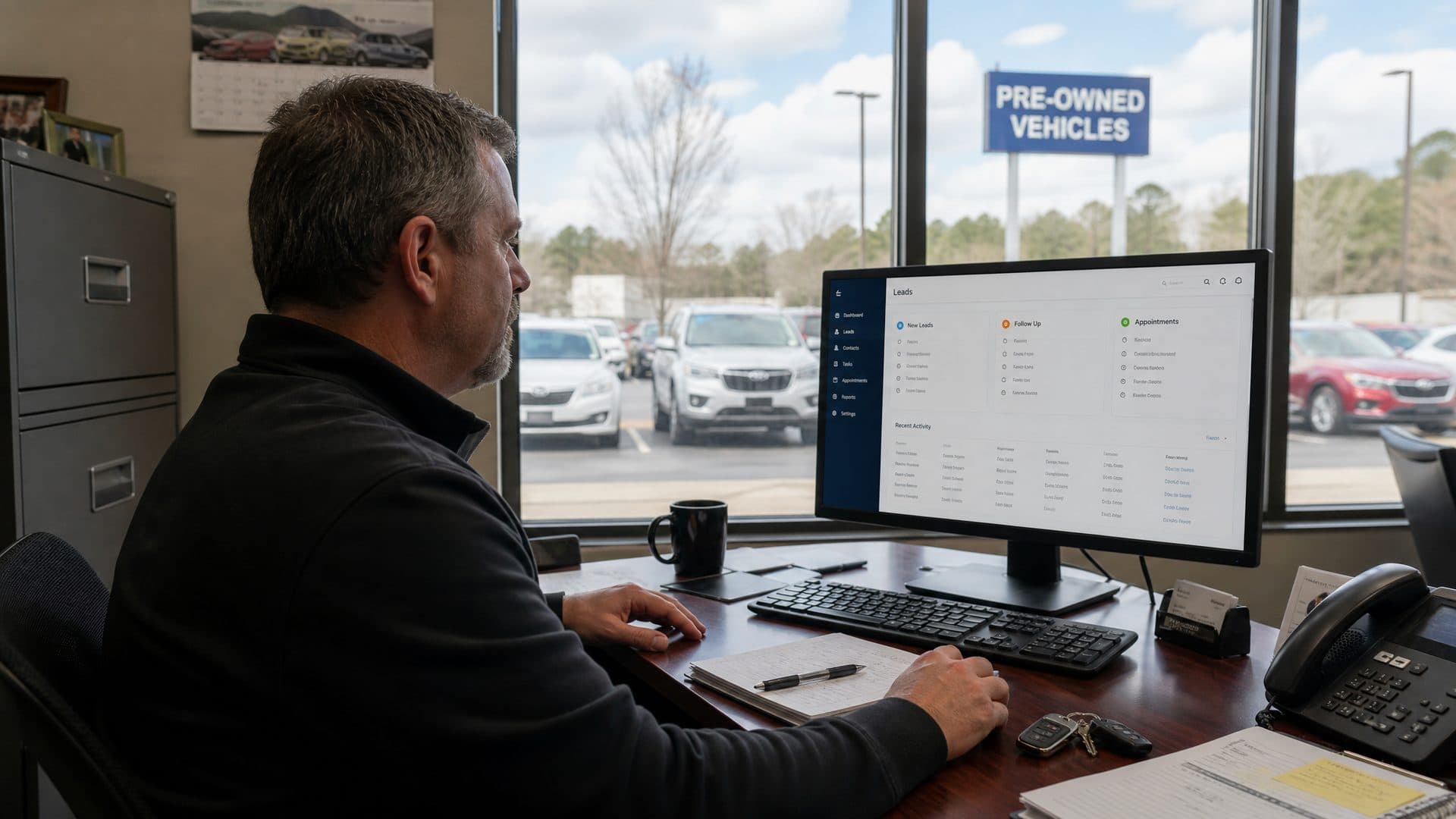

In 2026, the core answer behind "Why 63% of Car Buyers Judge Dealers by Review Replies" is operational: in 2026, dealership review replies are a purchase-decision factor, not a marketing nicety. A 2025 Cars Commerce reputation study found 63% of customers expect a business to respond to negative reviews within 2 to 7 days. That window is tighter than most BDC follow-up cadences. Miss it, and the silent majority reading the thread has already crossed your rooftop off the list. Research from Carscommerce backs the point.
Key Takeaways
- In 2026, the core answer behind "Why 63% of Car Buyers Judge Dealers by Review Replies" is operational: in 2026, dealership review replies are a purchase-decision factor, not a marketing nicety.
- Here's the disconnect: reviews shape both how a shopper sees your store and how search engines rank it.
- Across the rooftops we work with, the fix is distribution, not volume at a single site.
- A fresh review is one written recently enough that a shopper reads it as a description of your current store, not your store's history.
- Talk to any GM running a BDC the way we do and they'll tell you the same thing.
Why Do Dealership Review Replies Decide Sales in 2026?
The 2-to-7-day response window buyers actually expect
The behavior behind that number is simple. Shoppers hunt reviews long before they submit a web lead or walk the showroom. A GM can run the cleanest service drive in the metro and still lose deals because a three-month-old one-star sits at the top of the Google panel with no reply under it. The reply is the signal. Silence is also a signal. Reporting by Autoremarketing gives the source context.
How reviews shape both perception and local SEO
Here's the disconnect: reviews shape both how a shopper sees your store and how search engines rank it. Is why CallRevu calls active review management essential for any dealer that wants to stay competitive. Two jobs now live on the same desk. One is perception - what a dealer principal looks like to a human reading the thread. The other is local SEO - how Google decides which rooftops surface on the map pack for your brand in your city. Ignore either and the pipeline quietly thins.
Where Are Car Shoppers Actually Reading Dealer Reviews?
The 61% marketplace-first shopping pattern
Here's the catch with a Google-only review strategy: the search doesn't start there anymore. Cars Commerce pegs 61% of shoppers kicking off their hunt on a marketplace like Cars.com. If every review ask from your BDC funnels to a single Google listing, you're stacking reputation on the wrong shelf. The VDP click a shopper makes at 10 p.m. on Cars.com gets decided by the review texture that sits under the vehicle listing, not under your rooftop's Google profile. Fix the distribution before you worry about the star count.
Why spreading reviews across Cars.com, Google, and Facebook matters
Across the rooftops we work with, the fix is distribution, not volume at a single site. Cars Commerce recommends spreading feedback across Cars.com, Google, Facebook, and beyond to build trust at every touchpoint a shopper hits. Practically, that reshapes how the BDC runs review asks:
The dealer rooftops winning discoverability in 2026
- Spread review asks across Cars.com, Google, and Facebook so shoppers hit fresh feedback at every touchpoint. Keep Google weighted for map-pack and local search visibility. Use Cars.com placement to reach marketplace-first shoppers who begin their search there. Pull named-employee praise into Facebook posts to reinforce culture for repeat buyers - Review the mix each quarter so no platform goes stale while another carries the load
What Is a "Fresh" Review, and Why Does It Beat a 5-Star Average?
How shoppers weight recency over lifetime rating
A fresh review is one written recently enough that a shopper reads it as a description of your current store, not your store's history. Cars Commerce puts it directly: freshness matters just as much as five stars, because shoppers want to know what the experience was like last week, not last year. A dealership sitting on a 4.9 lifetime average built in 2022 can lose to a competitor at 4.6 whose last twenty reviews landed in the past thirty days. Recency is the tiebreaker.
Get weekly AI strategies for your dealership
Join 2,500+ automotive professionals. No spam.
The word-of-mouth math of online vs in-person referrals
The reason recency wins traces back to how word-of-mouth actually travels now. CallRevu notes that online reviews go way further and way faster than human-to-human contact. One recent five-star from a service advisor the customer names by first name reaches more eyeballs in a week than a year of in-store referrals. That's why an aging 5-star average quietly loses leads while the dealer down the road with slightly lower stars and newer reviews pulls the VDP click.
How Should a Dealership Respond to a Negative Review?
The three-part response structure that converts critics
A one-star landing on the Google panel is not the end of the deal - it's an audition in front of the next hundred shoppers. CallRevu points out that even a rough review can be turned around when the dealership responds with real solutions. The customer who wrote the complaint may or may not come back. The fifty prospects scrolling past that thread this week are the ones whose minds the reply actually changes. They're reading how the service manager owned it, how fast a name showed up, whether a real phone number got offered. That's the working footage that closes the next trade-in.
Why personalization signals post-sale engagement
Talk to any GM running a BDC the way we do and they'll tell you the same thing. The response framework that converts critics follows three beats, and every reply needs all three: 1. Acknowledge the specific issue by name - not a generic "we're sorry you had a bad experience" 2. Name a real person who will own the resolution - the service manager, the fixed ops director, the GSM 3. Move the conversation offline with a direct phone or email path. Follow up publicly once resolved CallRevu's research backs the reason this works: customers want to know their review was noticed and read. Future shoppers are looking for the same signal before they trust the rooftop with a deposit.
What NOT to say in a public reply
Personalization in a reply does something the star rating cannot. Cars Commerce puts it plainly: a personalized response indicates to potential customers that you will follow up and stay engaged even after the sale. For a shopper who has been burned at another store, that signal is the deciding factor. It tells them this dealership will answer the phone in ninety days when the check-engine light comes on. Avoid legal-defensive language. Never argue facts in the public reply. Never blame the customer - those three moves turn a recoverable review into a permanent mark.
78% of car buyers choose the first dealer to respond - and the industry average response time is 1 hour 38 minutes. See how Speed to Lead replies in under 60 seconds: automated SMS response that captures inbound leads 24/7 before your competitors can pick up the phone.
Can You Trust AI-Generated Dealer Reviews Anymore?
How AI slop is polluting dealer review corpora
Generated review text is now polluting dealer review corpora on both sides of the fence. The Drive documented this in late 2025, noting that "didn't suck out loud" is pretty much where the bar sits when real enthusiasts read through dealer review pages. Shoppers have started to pattern-match the tells - overly polished phrasing, vague praise, no specific employee names, reviews that sound generated rather than lived. Data from Thedrive supports the pattern.
What real shoppers look for to spot authenticity
The Drive's late-2025 coverage made the authenticity problem concrete, running a Ford F-150 dealer review snippet alongside the line that "didn't suck out loud" is pretty much where the bar sits these days. That sets a new floor for what the BDC should solicit. A star rating alone no longer carries the weight it used to when shoppers assume a chunk of the feed could be fabricated. Ask for reviews tied to a specific delivery or service visit. The customer can name the advisor and describe the experience in their own words - that's the texture generated text still struggles to fake.
Why named-employee praise is the anti-AI signal
The comment sections under automotive journalism now show the same suspicion - The Drive's readers openly debate which reviews across the web read as machine-generated versus lived. The authenticity signal for a dealership is simple to produce and hard to fake: named-employee praise. A review that says "Marcus in service walked me through the brake job before he started" reads as real to both a human shopper and to Google's review signals. A review that says "the service was excellent and the staff was professional" reads as filler, whether a person or a model wrote it. Coach your team to ask for name-specific feedback.
How Do Top-Rated Stores Use Reviews as a Focus Group?
Reading reviews for process gaps, not just ratings
The top-rated stores in 2026 treat their review feed as operational intelligence, not a scoreboard. Cars Commerce reports many top-rated teams use reviews as a real-time focus group on their customer experience, surfacing which parts of the process are working and which need attention. That reframes who reads reviews each morning. It should not be just the marketing coordinator. A service manager, a sales manager, and a fixed ops director pulling the weekly review feed will find process gaps a CSI survey will never surface.
Using named praise to reinforce culture
The most valuable pattern to mine is named-employee praise. CallRevu's analysts noted they were impressed by how often customers praised individuals by name for providing friendly, knowledgeable service. That data has real uses on the dealership floor: - Reinforce culture by reading named praise aloud in the Monday sales meeting and service huddle - Identify. Specific salespeople and advisors are driving retention so the dealer principal can protect them. Spot the quiet performers - the service advisor who never asks for the review but gets named in half the ones that arrive - Surface the training gaps - departments that never get named praise are usually the ones with the highest complaint rate
Turning service feedback into retention opportunities
Reviews also open a retention lane most stores leave on the table. CallRevu points out that online reviews give a dealership the opportunity to stay in contact with customers and offer future service and maintenance. A five-star review from a buyer who took delivery ninety days ago is a permission slip to reach back out for the first service visit. Fixed ops directors who read reviews as a retention pipeline - not just a reputation metric - convert more of those customers into recurring service drive visits. That's where the real lifetime value sits.
Which Tactics Actually Generate More Dealer Reviews?
Showroom-level tactics: QR codes and reminder cards
Volume doesn't come from clever campaigns - it comes from asking in the right moment with the right mechanics. The reminder card tucked into the delivery folder, the QR code taped to the service drive kiosk, the follow-up text ninety minutes after a test drive - each of those lives at a moment. The customer still remembers the salesperson's name and the specific trim they drove. A bulk email blast two weeks later catches the customer mid-commute and gets deleted. Mechanical asks at the handoff moment carry the review feed.
Post-sale timing windows that convert asks into reviews
From the review programs we've run across franchise and independent stores, what turns those tactics into volume is speed and personalization at the ask. Cars Commerce emphasizes that a quick, personalized response matters to both current and future customers. A salesperson who texts a customer by name within two hours of delivery, referencing the specific vehicle, gets a reply rate a bulk email blast cannot touch. The timing window that converts is narrow: the first 24 hours after delivery for sales, the first 4 hours after pickup for service. Wait a week and the customer has already moved on. Ask in the window, keep it personal, spread the asks across Cars.com, Google, and Facebook, and the review feed compounds on itself.
Frequently Asked Questions
What should dealers take from car buyers judge dealers review?
In 2026, the core answer behind "Why 63% of Car Buyers Judge Dealers by Review Replies" is operational: in 2026, dealership review replies are a purchase-decision factor, not a marketing nicety.
How does this change BDC or showroom follow-up?
A 2025 Cars Commerce reputation study found 63% of customers expect a business to respond to negative reviews within 2 to 7 days.
What numbers should a general manager watch first?
Miss it, and the silent majority reading the thread has already crossed your rooftop off the list.
When does this become an ROI problem?
Shoppers hunt reviews long before they submit a web lead or walk the showroom.
How should a dealership act on this in 2026?
A GM can run the cleanest service drive in the metro and still lose deals because a three-month-old one-star sits at the top of the Google panel with no reply under it.