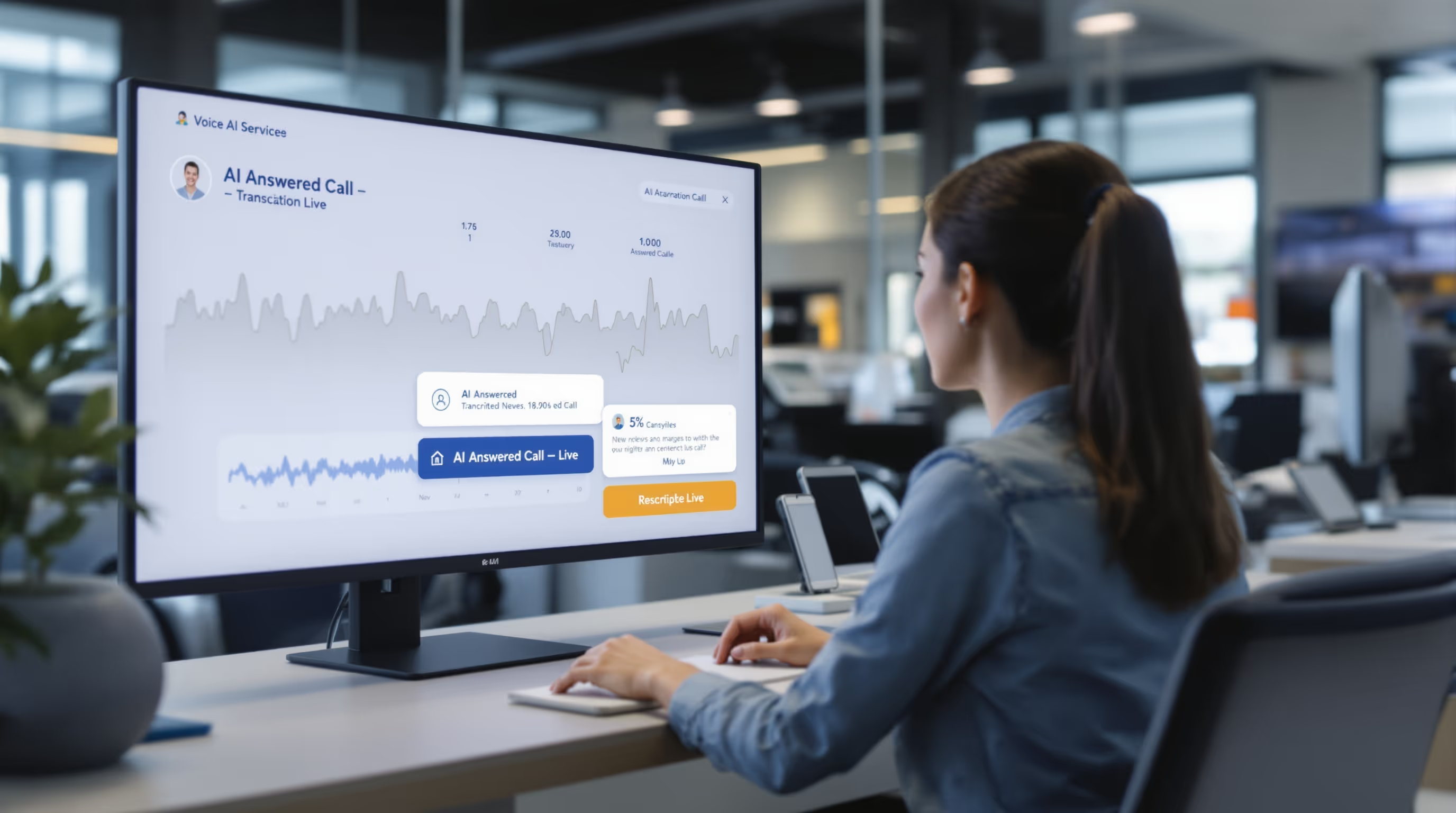
Every missed call is money left on the table. In a world where car buyers expect instant responses, unanswered calls damage your reputation and cost you sales. But there’s a solution.
Smart call routing, AI-driven distribution, and CRM integration ensure every call gets answered by the right person, at the right time. Add automated follow-ups to keep leads engaged, and you’ve got a system that increases dealership sales and retention while improving customer satisfaction.
AI call routing tools connect callers to the right team member based on real-time data.
CRM integration tracks every interaction, giving your team the insights they need to close deals faster.
Automated follow-ups ensure no lead is forgotten, even after hours.
Implement these tools, and you’ll never miss another opportunity to grow your dealership.
Get weekly AI strategies for your dealership
Join 2,500+ automotive professionals. No spam.
Your Dealership Is Missing 1 in 4 Calls 🚨 AI Can Fix That
::: @iframe https://www.youtube.com/embed/JFIi8l0A8_k :::
Smart Call Routing: Send Every Call to the Right Person
Dealerships can’t afford the inefficiency of phone tag. Smart call routing systems function like a skilled traffic controller for your sales team, ensuring every incoming call reaches the right person without unnecessary transfers or long hold times. This approach streamlines communication and keeps customers engaged.
What sets smart routing apart from traditional phone systems is its real-time decision-making capability. Instead of rigid call trees, these systems evaluate multiple factors - caller history, agent availability, department expertise, and even the time of day - to instantly direct calls to the most qualified team member. This precision boosts your chances of turning inquiries into sales. Next, let’s explore how AI takes call distribution to the next level by using real-time data.
How AI Call Distribution Works
AI-powered call routing operates as a round-the-clock assistant, using natural language processing (NLP) to analyze a caller’s words and tone. It combines this analysis with historical CRM data and real-time agent availability to make smarter routing decisions [1]. For example, if a frustrated customer calls about a service issue, the AI detects their tone and sentiment, routing them directly to your most experienced service advisor instead of a junior sales associate [1].
CRM integration drives efficiency. The system pulls data such as past interactions, purchase history, and website activity to build a complete caller profile in seconds [1]. If Mrs. Johnson, who bought a car six months ago, calls, the system immediately identifies her as a returning customer and routes her to the service department, bypassing the sales team entirely.
Real-time availability tracking ensures high-value leads don’t slip through the cracks. The system monitors your team’s status and assigns calls strategically. For instance, when your top sales rep finishes a call, the next priority lead is routed to them instead of being left to chance.
Key Features for Dealerships
Automated call queues keep wait times short and ensure no lead goes unanswered. Callers hear professional hold messages with estimated wait times and can even request a callback. High-value customers and hot leads are automatically prioritized, moving to the front of the queue.
The system also leverages department-specific and skills-based routing to connect customers with the right team or individual. Financing calls go straight to your payment experts, while service inquiries land with technicians who can provide immediate solutions. This targeted routing improves first-call resolution rates and enhances customer satisfaction.
24/7 availability through AI-assisted answering ensures you’re always “open.” Even after hours, the system captures lead details, schedules test drives for the next day, and provides essential service information. This keeps your dealership operational around the clock, meeting the needs of customers who prefer to call outside of regular business hours.
This smart routing technology lays the groundwork for integrated CRM tracking, which we’ll dive into next.
CRM Integration: Track and Manage All Calls
When combined with smart call routing, CRM integration transforms your phone system into a sales powerhouse. By connecting call tracking with your customer relationship management system, you turn every conversation into actionable insights that fuel your dealership’s success.
This integration doesn't just log calls - it ties them to website visits, emails, and showroom interactions, creating a full picture of the customer journey. With this comprehensive view, your sales team knows exactly where each prospect stands in the buying process before they even pick up the phone.
Real-time data synchronization takes it a step further by automatically updating your CRM as calls come in. Key details like customer information, call duration, conversation notes, and follow-up tasks are logged instantly, eliminating the need for manual data entry. That means your team spends less time on admin work and more time closing deals.
These updates not only enrich customer profiles but also streamline lead management, helping your team prioritize and act with precision.
Benefits of CRM Call Tracking
Call logging ensures every interaction is captured without burdening your staff. Details like caller ID, call duration, timestamps, and conversation outcomes are automatically recorded in the customer’s CRM profile. This creates a seamless communication history that’s accessible to your entire team.
Intelligent lead scoring uses call data to rank prospects based on their buying signals. If a customer asks about financing options or scheduling a test drive, the system can mark them as a high-priority lead, ensuring your team focuses their efforts where it matters most.
The integration also enables post-call surveys to collect additional insights. These surveys can gauge satisfaction levels, identify customer needs, and categorize leads more effectively. Armed with this information, your team can tailor future interactions to match each customer’s preferences [3].
Call whispers provide your team with a quick snapshot of the caller’s history before they even answer. Details like previous interactions, vehicle preferences, and service history help your staff deliver more personalized conversations, showing customers that your dealership values their time and loyalty [3].
Improving Team Accountability and Efficiency
CRM call tracking doesn’t just enhance customer interactions - it also boosts your team’s performance. Performance tracking becomes effortless when call data flows directly into your CRM dashboard. Managers can easily monitor key metrics like call volume, conversion rates, and response times without having to compile reports manually. It’s no wonder that over 74% of U.S. businesses use CRM systems to better manage customer interactions [3].
With lead scoring systems, prospects are rated on a 1-5 star scale, making it easy to identify high-potential opportunities. Experienced salespeople can focus on these leads, while newer team members handle initial inquiries and follow-ups [3].
Speed-to-lead performance is another critical metric tracked by the system, measuring the time between a customer’s first contact and your team’s response. With car buyers now visiting just two dealerships on average before purchasing [4], and over 80% beginning their journey online [4], a fast response can be the difference between winning or losing the sale.
Call recordings and transcriptions offer valuable coaching opportunities. Managers can review conversations to pinpoint effective techniques, address common objections, and identify areas for improvement - all without interrupting live calls [3].
Data segmentation strategies further enhance your marketing efforts by grouping customers based on shared traits like vehicle preferences, budgets, or service needs [2][4]. This allows for targeted campaigns and follow-up sequences that drive both conversions and satisfaction.
Finally, regular data cleansing and updates keep your CRM accurate and actionable. Outdated contact details, duplicate entries, and incomplete profiles are flagged, ensuring your lead database stays in top shape and consistently delivers results [2][4].
sbb-itb-0329cfa
Automated Follow-Up Systems: Keep Every Lead Active
An effective CRM system lays the foundation, but automated follow-up systems ensure that no lead slips through the cracks. The time between an initial contact and a follow-up is critical - it can determine whether you close the deal or lose the opportunity. While your CRM captures all the details of every call, automated follow-ups ensure those leads stay warm after the first conversation. These AI-driven tools operate 24/7, keeping prospects engaged even when your team isn’t available.
These systems take it a step further by analyzing call data and customer behavior to send personalized follow-ups at just the right moment. For instance, if a customer inquires about a specific vehicle but doesn’t book a test drive, the system can automatically send tailored information about the model, financing options, and available appointments shortly after the call ends.
In today’s fast-paced market, where buyers make decisions quickly and attention spans are short, automated follow-ups bridge the gap between initial interest and action. They keep your dealership front and center in the customer’s mind, especially during times when your staff is unavailable to follow up directly.
Integrating automated follow-ups with CRM data enhances personalization. Instead of sending generic messages, these systems use service history and trade-in records to craft communications that resonate with the individual customer. By turning CRM insights into meaningful actions, automated follow-ups help nurture leads and build trust.
How Automation Improves Response Times
Quick responses can make all the difference in converting leads. When customers reach out after hours or during busy periods, automated systems can immediately send acknowledgment messages via SMS or email. These messages confirm their inquiry, provide an estimated callback time, and offer alternative ways to engage - such as scheduling an appointment online or reviewing vehicle options.
Automation also simplifies scheduling. By integrating directly with service calendars and sales team availability, these systems can instantly display open time slots for test drives or service appointments. For example, if a customer requests a test drive, the system can confirm the booking via text in real time, eliminating the back-and-forth that often leads to missed opportunities.
The timing of follow-ups is just as important as the content. Behavioral triggers allow automated systems to reach out based on specific customer actions, ensuring follow-ups feel relevant and timely. Multi-channel communication options - like SMS, email, or calls - let you connect with prospects on their preferred platforms. By tracking response patterns, these systems can fine-tune their outreach strategies to maximize engagement.
Frequency matters too. Leads expressing high interest, such as those ready to buy, receive more frequent touchpoints to keep the momentum going. Meanwhile, cooler prospects benefit from less frequent, value-driven campaigns that maintain interest without overwhelming them.
Faster response times paired with thoughtful compliance measures ensure your outreach builds trust and keeps you ahead of the competition.
Compliance with U.S. Messaging Regulations
Speed and personalization are essential, but compliance is non-negotiable. Federal regulations govern automated communications, and dealerships must adhere to these standards to avoid hefty fines. The Telephone Consumer Protection Act (TCPA) mandates explicit consent before sending automated texts or making robocalls to cell phones. Violating these rules can result in serious penalties, so it’s crucial to prioritize compliance.
To stay on the right side of the law, your intake process should include clear language requesting consent for automated follow-ups. This consent must be documented in your CRM, creating a verifiable audit trail if needed.
Automated email communications also fall under the CAN-SPAM Act. Every email should include accurate sender information, honest subject lines, and a simple way for recipients to unsubscribe. Opt-out requests must be handled promptly, and suppression lists should prevent further contact with those who withdraw consent.
Tools like VisQuanta’s AutoMaster Suite help manage these compliance requirements seamlessly. These systems maintain consent records, process opt-out requests efficiently, and allow your team to focus on sales rather than worrying about legal risks.
Record-keeping is another critical element of compliance. A well-designed system logs every automated communication, including the time, method, and content, along with customer responses. These records not only protect your dealership legally but also provide valuable insights into which messages drive the best results.
Finally, don’t overlook state-level regulations. Some states impose stricter consent rules or shorter timelines for processing opt-outs. Your automated system should apply the highest standard across all communications to ensure compliance with both federal and state laws.
Performance Monitoring and Improvement: Keep Your Dealership Ahead
Automated follow-ups are just the beginning. To truly stay ahead, you need consistent performance monitoring. Regular evaluations help you catch issues before they snowball into lost leads or revenue. By actively tracking key call metrics, your dealership can shift from merely reacting to problems to anticipating and addressing them strategically. This evolution from basic automation to advanced analytics ensures your system not only captures calls but adapts and improves to meet customer expectations.
Every day, dealerships generate a wealth of call data. But raw data alone doesn’t move the needle - it’s the insights you extract and act on that make the difference. The goal is to turn that data into clear, actionable steps to enhance processes and team performance.
The Importance of Call Performance Audits
Data insights are powerful, but regular audits take it a step further. Call performance audits act as an early warning system, identifying areas that need attention before they become costly problems. Using the CRISP methodology - Connect, Request & Invite, Set, Pursue - you can break each call into measurable components. This method helps pinpoint specific weaknesses, allowing your team to refine their approach and ensure every customer interaction is handled effectively from start to finish.
Using Analytics to Drive Improvements
Analytics take the guesswork out of improving call performance. With detailed insights from BDC metrics, you can see exactly how your call processes are performing. Tools like VisQuanta's AutoMaster Suite integrate seamlessly with your CRM, offering comprehensive dashboards that provide a full view of your sales funnel. This integration creates a feedback loop, enabling continuous improvement in call handling. By pairing these analytics with your CRM, you can refine every customer interaction and drive consistent, measurable results.
Conclusion: Take Control of Every Call and Increase Revenue
Every missed call represents a missed opportunity. By implementing these strategies, your dealership can ensure every lead is captured and improve first contact rates. Smart call routing connects customers to the right person without delay, while CRM integration adds accountability and tracks every interaction seamlessly. Automated follow-up systems keep leads engaged when immediate responses aren’t possible. And with performance monitoring, you can continuously fine-tune your approach for better results. Together, these tools not only build customer trust but also drive measurable revenue growth.
AI-powered platforms can ensure no call goes unanswered, recovering substantial revenue. Missed service calls alone are costing dealerships over $1 million annually[5][6].
With VisQuanta's AutoMaster Suite, you get a solution that integrates with your CRM, reduces response times with AI-driven speed-to-lead technology, and handles inquiries round the clock. The results speak for themselves - over $19.4 million in additional revenue generated for dealerships across the country. It’s a proven way to transform your customer experience while increasing profitability.
Don’t let another lead slip away. Take action now to turn every customer interaction into a revenue opportunity. Contact VisQuanta today.
FAQs
::: faq
How can AI-driven call routing help dealerships boost customer satisfaction and sales?
AI-powered call routing transforms how dealerships handle customer calls by swiftly directing them to the right department or agent. This reduces wait times and ensures customers connect with someone who can address their needs without delay, creating a smoother and more efficient experience. Fewer missed calls mean more satisfied customers and fewer lost opportunities.
Beyond call routing, AI can take on tasks like qualifying leads, scheduling appointments, and managing automated follow-ups. These capabilities free up staff time, streamline daily operations, and boost the chances of converting inquiries into sales - all of which contribute to increased revenue for the dealership. :::
::: faq
How does integrating a CRM with call tracking benefit car dealerships?
Integrating a CRM system with call tracking can revolutionize the way car dealerships handle customer interactions and drive sales. By combining customer details and call data in one place, dealerships can streamline lead management, respond to inquiries more quickly, and maintain seamless communication across their teams. The result? Happier customers who are more likely to stick around.
On top of that, this integration delivers real-time insights into call performance and marketing effectiveness. Dealerships can pinpoint what’s working and identify areas that need improvement. Armed with this data, businesses can fine-tune their sales strategies, minimize missed opportunities, and boost revenue. :::
::: faq
How do automated follow-up systems help capture leads after business hours?
Automated follow-up systems keep your dealership in touch with potential leads around the clock. Powered by AI-driven tools, these systems can handle tasks like sending personalized messages, scheduling callbacks, and qualifying leads - all without requiring your team’s immediate involvement.
This constant communication ensures no lead falls through the cracks, even after business hours. By nurturing prospects until they’re ready to move forward, these systems boost responsiveness, improve customer satisfaction, and increase conversion rates. It’s a smart way to make sure your dealership seizes every opportunity, 24/7. :::