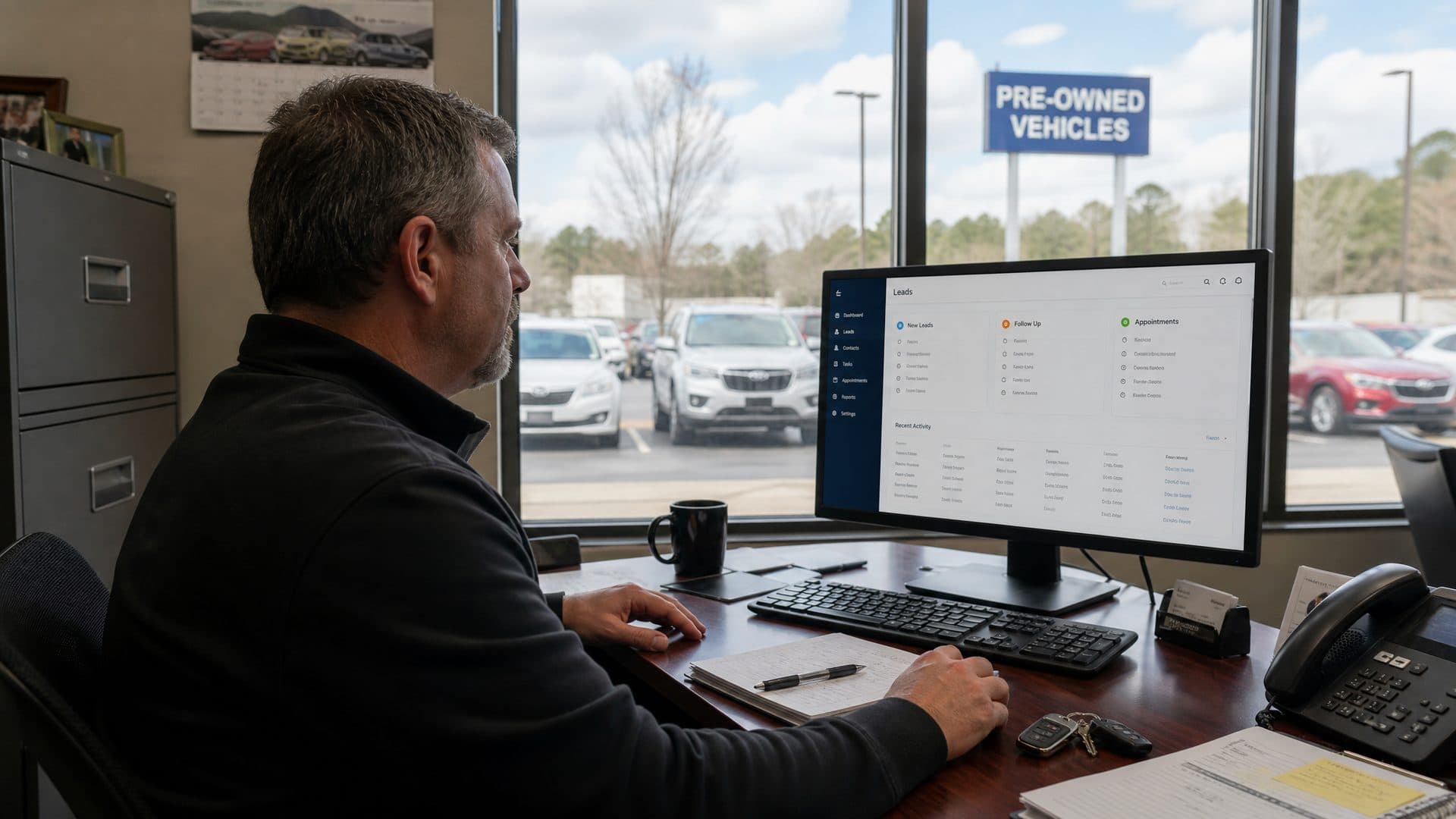

Half of Shoppers Want to Negotiate Online - Most Can't
Five years ago, a Cars.com survey highlighted by Auto Dealer Today found that nearly half of car shoppers already wanted to negotiate price through a screen and structure their own financing — complete with reliable monthly figures — without setting foot on a dealer's lot. That 2021 data was a prediction of where the industry was heading, and five years later the prediction has held. What hasn't moved is the dealer side. Any store still funneling digital leads into mandatory phone screens or forced appointments in 2026 is building its sales process around a friction point the buyer decided to route around half a decade ago — and the data backing that behavior is now old enough to vote.
The generational split makes it worse. McKinsey research cited alongside those Cars.com figures shows fewer than one in three younger shoppers have any intention of browsing inventory on a physical lot, and an even larger cohort actively seeks touchless service channels . Here's the disconnect: an older buyer who hits a digital dead-end may grudgingly pick up the phone. A younger one opens a competitor's tab. Friction doesn't produce callbacks - it produces defection. The physical showroom still holds real value, but it functions as a closing environment now, not a discovery one - and only for buyers whose online experience gave them a reason to show up.
The industry sees the momentum. Automotive retail is drifting toward a model that mirrors what shoppers already expect from every other major online marketplace . Here's the disconnect: recognizing a shift and executing on it are two completely different things. Most dealership websites still feel like they were designed to capture an email address, not close a deal.
Online Car-Buying Expectations vs. Reality
| Shopper Expectation | Current Reality |
|---|---|
| Nearly half want to negotiate price online | Most sites funnel leads into phone screens or forced appointments |
| Comparable share expect to structure financing with reliable monthly figures online | Digital tools still route customers into back-office negotiation loops |
| Fewer than 1 in 3 younger shoppers intend to browse inventory on a physical lot | Most dealership websites are designed to capture emails - not close deals |
| Larger cohort of younger buyers actively seeks touchless service channels | Friction produces defection - younger buyers open a competitor's tab |
Key Takeaway: Nearly half of car shoppers want to negotiate price online, yet most dealership websites still can't support that expectation - creating a friction point that drives younger buyers straight to competitor tabs. Even Amazon's partnership with Hyundai stalled after twelve months, proving that technology alone can't override the franchise-law fragmentation and layered pricing economics that define automotive retail.
Amazon Tried Selling Cars - Here's What Broke
When Hyundai and Amazon announced a joint effort to move new-car sales onto the world's largest e-commerce platform, the industry treated it as a watershed moment. Twelve months later the program had stalled well short of operational viability , as reported by Thedrive. A commenter on the coverage distilled the core problem: both companies underestimated how deeply the American retail auto market is shaped by franchise-law fragmentation, dealer-by-dealer inventory economics, and state-level regulatory patchwork. Building a buy-now button is trivial. Reconciling fifty different legal frameworks that dictate who can sell a vehicle, at what price, and under whose license is not. The failure wasn't about technology - it was about institutional architecture that no single storefront - however massive its user base - can simply override.
Marketplace platforms underestimate what dealerships actually do beyond the transaction. Critics of the Amazon experiment pointed out that consumers who trash-talk dealers often overlook warranty work, financing facilitation, trade-in logistics, and post-sale support . Stripping all of that out to build a one-click checkout sounds elegant in a pitch deck. It collapses under the weight of real-world automotive retail.
Get weekly AI strategies for your dealership
Join 2,500+ automotive professionals. No spam.
One commenter on the Hyundai-Amazon coverage captured the pricing disconnect plainly: a hypothetical buyer goes to Amazon expecting to purchase a car for two thousand dollars below MSRP . That expectation collides with the layered economics of franchise retail - dealer holdback, regional advertising fees, manufacturer incentive programs that vary by zip code. The comment was sardonic, but the tension is real. Marketplace platforms promise simplicity. Automotive pricing is structurally resistant to it. Until a platform can reconcile consumer price expectations with the financial architecture dealers actually operate within, the online-marketplace model for new vehicles remains an aspiration - not an operational reality.
Why the Amazon-Hyundai Car Sales Experiment Stalled
| Barrier | Detail |
|---|---|
| Franchise-law fragmentation | Fifty different state-level legal frameworks dictate who can sell, at what price, and under whose license |
| Consumer price expectations | Buyers expect to purchase for $2,000 below MSRP - colliding with dealer holdback, regional ad fees, and zip-code-level incentives |
| Operational viability | Program stalled well short of operational viability after 12 months |
| Stripped dealer functions | Warranty work, financing facilitation, trade-in logistics, and post-sale support cannot be replaced by a one-click checkout |
Chatbots, Reviews, and the Trust Problem
AI Chatbots That Fold Under Pressure
Dealerships are rushing chatbots onto their websites. Early adopters are finding out the tools are far from bulletproof , per Thedrive. Consumers report steering conversations in any direction they choose, and the bots frequently start contradicting their own earlier statements as the exchange drags on. When a tool designed to build confidence actually erodes it, the investment backfires.
Fake Reviews Poisoning the Well
The trust deficit goes well beyond chatbots. Online dealer reviews have become so unreliable that even obviously satirical praise - comments that read like parodies of five-star endorsements - blends seamlessly into the noise , research from Thedrive. When a glowing review is indistinguishable from a joke, the entire review ecosystem loses its value. Shoppers trying to vet a rooftop before committing to a visit have nothing solid to stand on.
The "Just Let Me Buy It" Fantasy
Some buyers have a dead-simple vision: show up, test drive, sit down at a screen, finalize the deal without a single upsell pitch from the F&I office . The reality is that most digital retail tools still funnel customers into the same back-office negotiation loop - just with a tablet instead of a paper worksheet. Until the process genuinely changes - not just the interface - skepticism will keep consumers from trusting the "buy online" button.
Digital Trust Failures Across the Car-Buying Journey
| Trust Channel | Problem Identified |
|---|---|
| AI Chatbots | Consumers steer conversations freely; bots contradict their own earlier statements as exchanges drag on |
| Online Dealer Reviews | Obviously satirical praise blends seamlessly into noise - glowing reviews are indistinguishable from jokes |
| Digital Retail Tools | Most still funnel customers into the same back-office negotiation loop - just with a tablet instead of a paper worksheet |
| "Buy Online" Button | Process hasn't genuinely changed - only the interface has - keeping consumer skepticism high |
Subscription Upsells Are Training Buyers to Distrust the Process
Automakers are not just selling cars anymore - they are building recurring revenue streams on top of them. Tesla raised the price of its Full Self-Driving package to fifteen thousand dollars, a figure that stunned even loyal fans of the brand , Thedrive reports. That kind of sticker shock on a software feature reframes the entire purchase equation for buyers who thought they were done spending once they drove off the lot.
The revenue appetite extends well beyond Tesla's orbit. Stellantis chief Carlos Tavares has staked a public target of 22.5 billion dollars in software-derived income by the end of the decade . That last data point matters: that figure would rival the annual revenue of some mid-size automakers - generated entirely from digital add-ons layered on top of vehicles already sold. Sticker price is becoming a floor, not a ceiling. Total cost of ownership now includes a rolling software ledger that didn't exist a generation ago. For online shoppers already wary of hidden fees, this trajectory makes transparent pricing harder to deliver, not easier.
Subscription pricing tries to soften the blow. Tesla offers FSD Beta at 199 dollars per month - positioning it as a commitment-free alternative to the five-figure upfront purchase . But monthly fees compound buyer fatigue fast, especially when the feature set keeps shifting and long-term value stays uncertain. What looks like flexibility on paper feels like a treadmill in practice.
That last data point matters: these digital purchases do not follow buyers to their next vehicle. Spending enough on software to raise a monthly payment by roughly three hundred dollars - only to lose that investment at trade-in - breeds deep distrust . When online car buying already feels opaque, layering non-transferable digital costs on top makes the entire process look designed to extract maximum revenue, not deliver maximum value.
Ready to stop losing revenue to missed calls? Schedule a strategy call with the VisQuanta team - we'll audit your after-hours coverage and show you exactly where the gaps are.
Data-Driven Shops Already Know What Works
While much of the industry waits for a marketplace unicorn to solve digital retail overnight, some dealers are quietly closing the gap with data. Platforms now surface trend information from the previous 90 days - giving managers a statistical foundation for pricing decisions, inventory moves, and marketing spend . The dealers using these tools are not guessing. They are responding to signals their competitors have not even started tracking.
The most advanced versions pull together every essential data point a dealership needs to arrive at what practitioners call a scientifically sound, transaction-ready solution for each customer . Instead of relying on gut instinct or a sales manager's memory of last month's close rates, these systems let dealers present offers that are defensible, competitive, and transparent. That is exactly the experience online shoppers are demanding.
Repair-Side Data Feeds the Whole Business
The data advantage extends beyond the sales floor. On the service side, new shop management tools capture repair metrics and apply hard numbers to what has traditionally been an intuition-driven operation , data from Thedrive. The logic is straightforward: a single loose drain plug can lead to a catastrophic engine failure costing twenty-five thousand dollars. Tracking every step of every RO is not micromanagement - it is risk prevention that protects the shop and the customer.
These tools translate an organic, hands-on business into measurable outputs . When techs and service advisors can see their own performance data, the shop gains a feedback loop that improves quality over time. For dealerships trying to build trust with digital-first buyers, backing up service promises with real data is a competitive edge no chatbot or flashy website can replicate.
Three Steps Dealers Should Take Before Year-End
Dealers who want to stay ahead of the digital retail curve don't need to wait for the perfect platform. Auto Dealer Today noted that the industry is starting to implement science, technology, and data to create a streamlined consumer experience . That principle should guide near-term investment: back-end systems that connect live inventory data to customer-facing tools so shoppers interact with real numbers - not placeholder estimates.
Here is a practical checklist grounded in that shift:
- Audit your current website workflow - if a shopper cannot move from vehicle selection to a data-backed payment estimate without submitting a lead form, the funnel is broken
- Connect your desking tool to your online storefront so the figures a customer sees at home match what they see in the finance office
- Use a trend-monitoring data set - the kind src_003 describes as displaying what trends looked like over the previous 90 days - to keep pricing aligned with current market conditions rather than last quarter's assumptions
The tooling already exists. The industry now has access to the most informative analytics platforms ever built for making educated, tactical, and profitable decisions . Dealers adopting these systems are not keeping up with consumer expectations - they are setting the pace. Waiting for a third-party marketplace to solve the problem means ceding control of the customer relationship to someone else's algorithm.
None of this is optional anymore. Being proactive and responsive to emerging trends is essential for any dealership that plans to remain relevant through the rest of the decade . Retailers who treat digital transformation as a checkbox exercise - bolting a chat widget onto an outdated site and calling it innovation - will get outmaneuvered by competitors who invested in infrastructure that actually moves metal. The wall is real. The tools to get over it are already on the shelf.
Frequently Asked Questions
How many car shoppers actually want to negotiate and finance online?
According to a Cars.com survey highlighted by Auto Dealer Today, nearly half of car shoppers want to negotiate price through a screen, and a comparable share expect to structure their own financing - complete with reliable monthly figures - without visiting a lot. These aren't aspirational numbers; they reflect behavior that has already calcified into expectation.
Why did the Amazon-Hyundai online car sales partnership fail?
Twelve months after launch, the program stalled well short of operational viability. The core issue was not technology but institutional architecture - franchise-law fragmentation across fifty states, dealer-by-dealer inventory economics, and pricing structures involving holdback, regional ad fees, and zip-code-level manufacturer incentives that no single marketplace platform could reconcile.
What's the ROI risk of deploying AI chatbots on our dealership website right now?
Early adopters are finding chatbots far from bulletproof - consumers can steer conversations in any direction, and the bots frequently contradict their own earlier statements as exchanges drag on. When a tool designed to build buyer confidence actually erodes it, the investment backfires. Dealers should audit chatbot performance rigorously before scaling deployment.
How quickly are we losing younger buyers if our digital experience has friction?
McKinsey research shows fewer than one in three younger shoppers even intend to browse inventory on a physical lot, and an even larger cohort actively seeks touchless service channels. Unlike older buyers who may grudgingly pick up the phone when they hit a digital dead-end, younger shoppers simply open a competitor's tab - friction produces defection, not callbacks.
Should we invest in a marketplace listing strategy or focus on our own digital retail tools?
The Amazon-Hyundai failure suggests that third-party marketplace platforms still cannot reconcile consumer price expectations - like buying $2,000 below MSRP - with the layered financial architecture dealers operate within. Investing in your own digital retail tools that genuinely change the buying process - not just swap a paper worksheet for a tablet - is more likely to produce results in the near term.
How do fake online reviews affect our dealership's ability to attract digital shoppers?
Online dealer reviews have become so unreliable that even obviously satirical praise blends seamlessly into the noise, making glowing reviews indistinguishable from jokes. This means shoppers trying to vet your rooftop before committing to a visit have nothing solid to stand on. Dealers need to actively manage and authenticate their review presence to stand out in a polluted ecosystem.